
How Many Bags of Cement Are Needed to Lay 1000 Blocks in Ghana?
Accurate material estimation is one of the most important aspects of construction planning. Builders, homeowners, and developers often ask:
“How many bags of cement are needed to lay 1000 blocks in Ghana?”
In most construction projects in Ghana, approximately 8 to 12 bags of cement are required to lay 1000 concrete blocks. However, the exact quantity may vary depending on factors such as block size, mortar mix ratio, and workmanship.
Understanding this estimate helps builders avoid material shortages, reduce waste, and manage construction costs effectively.
Professional construction companies such as Casa Experts Limited often perform detailed material calculations before construction begins to ensure efficiency and structural quality.
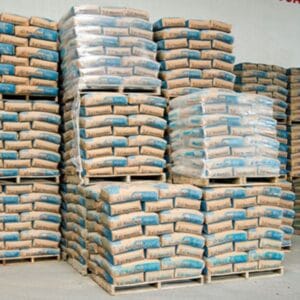
Average Cement Requirement for 1000 Blocks
In Ghanaian building construction, masons typically use mortar to join concrete blocks together.
A general estimate is:
| Blocks | Cement Required |
|---|---|
| 500 blocks | 4 – 6 bags |
| 1000 blocks | 8 – 12 bags |
| 2000 blocks | 16 – 24 bags |
This estimate assumes standard 6-inch blocks and a typical mortar mix ratio.
However, variations in construction practices may increase or reduce the amount of cement required.
Factors That Affect Cement Usage
Several factors influence how much cement is needed when laying blocks.
1. Block Size
Different block sizes are commonly used in Ghana.
Common Block Sizes
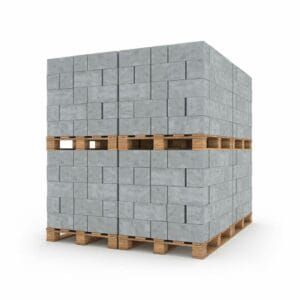
- 5-inch blocks – typically used for internal partitions
- 6-inch blocks – most common for residential construction
- 9-inch blocks – used for heavy load-bearing walls
Larger blocks often require more mortar between joints, which increases cement consumption.
Professional builders working on residential projects typically determine the correct block size based on structural requirements.
For properly planned construction projects, homeowners often work with experienced contractors such as Casa Experts Limited, which provide professional building construction services.
2. Mortar Mix Ratio
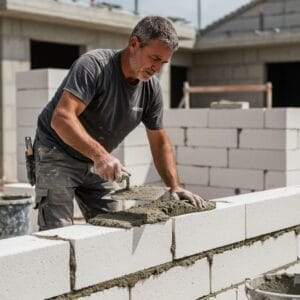
The mortar mix ratio used by masons significantly affects cement usage.
The standard mortar mix commonly used in Ghana is:
1:4 ratio (1 part cement to 4 parts sand)
This ratio provides adequate bonding strength for block walls.
Using too little cement can result in weak mortar joints, while excessive cement may increase construction costs unnecessarily.
Professional builders maintain the correct mix ratios to ensure strong and durable wall structures.
Block Quality
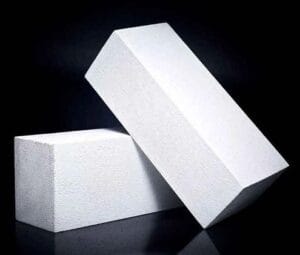
The quality of blocks also affects cement usage.
Poor-quality blocks tend to:
- Absorb more water
- Require more mortar
- Increase cement consumption
High-quality blocks, on the other hand, require less mortar and produce stronger walls.
Many contractors source reliable construction materials through trusted suppliers or construction professionals such as Casa Experts Limited, helping maintain quality standards during building projects.
Example Cement Calculation for 1000 Blocks
To better understand the estimate, consider the following simplified calculation.
Typical estimate:
-
1 bag of cement can lay approximately 90 – 120 blocks
Therefore:
1000 blocks ÷ 100 blocks per bag ≈ 10 bags of cement
This means that under normal construction conditions, around 10 bags of cement are usually required to lay 1000 blocks.
However, it is always advisable to add extra cement for contingencies, especially on large construction projects.
Tips to Reduce Cement Waste During Construction
Proper construction management can help reduce cement waste and control building costs.
Hire Experienced Masons
Skilled masons use mortar efficiently and minimize wastage.
Maintain Proper Mortar Ratios
Correct cement-to-sand ratios ensure durability while preventing unnecessary cement usage.
Use Quality Concrete Blocks
Good-quality blocks reduce mortar requirements and improve structural integrity.
Ensure Proper Site Supervision
Construction supervisors help ensure materials are used correctly and efficiently.
Professional project supervision services offered by Casa Experts Limited help ensure efficient construction management and prevent material wastage.
Importance of Accurate Construction Material Estimation
Many construction projects experience delays and cost overruns because of poor material estimation.
Accurate material planning helps to:
- Prevent construction delays
- Reduce project costs
- Avoid unnecessary material purchases
- Improve overall construction efficiency
Before starting a building project, it is always advisable to consult professionals who can properly estimate building materials and construction requirements.
Companies like Casa Experts Limited assist homeowners with construction planning, material estimation, and project supervision.
Conclusion
In Ghana, approximately 8 to 12 bags of cement are typically required to lay 1000 blocks, depending on factors such as block size, mortar mix ratio, and workmanship.
Proper planning, quality materials, and skilled labour are essential for achieving strong and durable building structures.
For homeowners and developers planning construction projects, working with experienced professionals like Casa Experts Limited helps ensure Project Consultation & Estimation, Renovation and Remodeling Services , and high-quality building results.
Frequently Asked Questions (FAQs)
1. How many bags of cement can lay 100 blocks?
On average, 1 bag of cement can lay between 90 and 120 blocks, depending on mortar thickness and block size.
2. How many bags of cement are needed for 2000 blocks?
Approximately 16 to 24 bags of cement may be required to lay 2000 blocks.
3. What mortar ratio is commonly used in Ghana?
The standard mortar mix ratio used by many builders is 1:4 (cement to sand).
4. Why do some builders use more cement when laying blocks?
Higher cement usage may occur due to poor block quality, incorrect mortar ratios, or inexperienced workmanship.
5. Can poor-quality blocks increase cement usage?
Yes. Poor-quality blocks absorb more water and require more mortar and cement, which increases construction costs.